
Online counselling for people who struggle to feel good enough
Life can feel exhausting and overwhelming at times. Maybe you’ve spent a long time just getting on with things. You’ve worked hard to build a good life for yourself, making the choices you thought were right, and taking care of others along the way. But more recently you’ve started to notice something doesn’t feel right.
Maybe you’re feeling lost, stuck, a bit invisible, or not quite good enough. You try and give your all to the people who are important to you, going out of your way to show them they matter, and yet, you still don’t feel like you’re important to them. Maybe this leaves you feeling you’re “being unreasonable and shouldn’t expect so much”.
Or perhaps you’re hard on yourself in ways other people don’t see. You spend a lot of time criticising yourself, comparing yourself to others, and feeling this constant pressure that you’re behind, with the never-ending list of milestones to achieve and timelines to follow. Maybe you’ve noticed you’re starting to doubt yourself more. From the outside, you look capable, you’ve achieved a lot and you have a life that looks full. Yet, on the inside, you’re second-guessing yourself and constantly thinking “I just need to try a bit harder “. Dismissing the nagging sense that something is wrong because “I have no reason to feel this way”. Or left feeling empty, unfulfilled, or as though you’re somehow still not enough.
You don’t have to keep carrying this on your own.
If you’ve been looking at counselling websites for a while, but always end up feeling “nothing is really that bad, I’d just be taking up a space someone else really needs.” I want to assure you, you don’t need to wait until life falls apart or something “big” happens before you ask for help. If something isn’t feeling right, that is reason enough.
Therapy with me is about helping you to feel more connected to yourself — noticing what you feel, what you need, and what matters to you. Alongside having the space to discover more of who you are so you can feel more at home within yourself, and more able to live in ways that feel true to you.
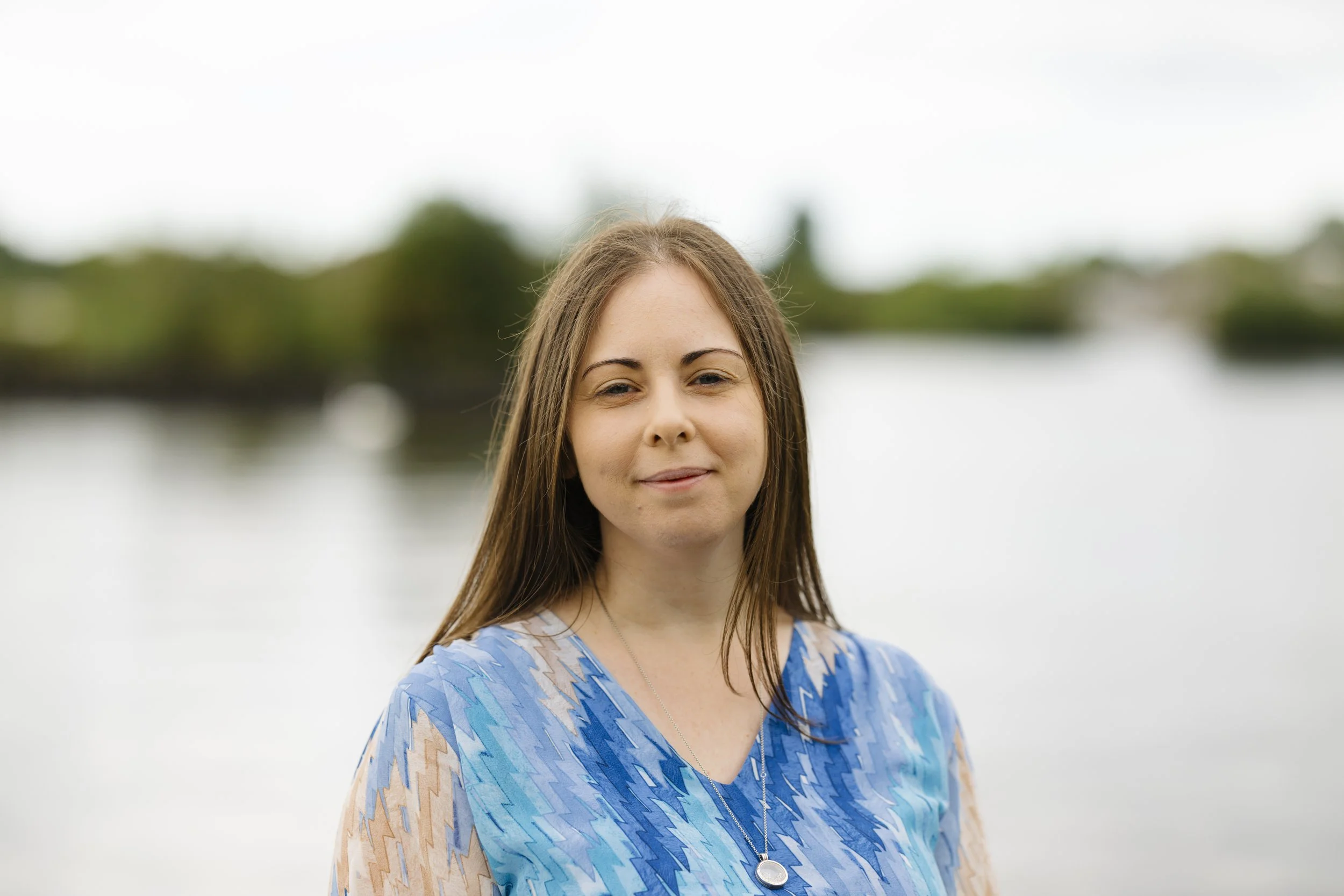
I'm Laurie Hole, a BACP-accredited psychotherapeutic counsellor, working online with adults in the UK.
I specialise in supporting adults with low self-esteem and have a particular interest in how our childhood experiences and relationships shape the way we see, feel about and respond to ourselves as adults.
A Curiously Kind approach to therapy
What can I help you with?
I work exclusively online with adults across the UK, offering an inclusive, neurodivergent-affirming and LGBTQIA+ allied space where all parts of you are welcome.
Why you might find yourself here:
Low self-esteem, self-doubt or a loud inner critic
Feeling stuck, lost or unsure of yourself
Low mood, sadness or depression
Anxiety, stress or feeling overwhelmed
People-pleasing or difficulty setting boundaries
Relationship difficulties or feeling disconnected from others
Life changes, transitions or experiences of loss
Questions around identity, belonging or feeling different
Burnout, exhaustion or feeling like you're always holding things together
Some of the people I work with recognise themselves in several of these experiences, while others may recognise themselves in just one or two. You don't need to have a name for what's wrong before you arrive, and nothing is too small to bring if it's causing you difficulty or distress. However you feel, and whatever has brought you here, it's welcome.

Two areas of particular interest within my counselling work.
Areas I specialise in
Self-Esteem, Social Anxiety & Identity
For when self-doubt, social anxiety, and a loud inner critic make it difficult to trust yourself and recognise your own worth.
The Lasting Impact of Childhood Experiences
For when growing up meant hiding your feelings, feeling responsible for others, or proving your worth through achievement.
You don’t need to fit into either of these boxes to work with me. Whether you want to focus on navigating what’s happening in your life today or explore earlier experiences that might still be shaping how you show up in the world as an adult, you are welcome here.
Reaching out can feel daunting, but you don't have to figure it all out before you get in touch.
Ready to take the first step?
If you have a question I haven’t answered here, you’re always welcome to get in touch and ask.
Frequently Asked Questions
-
You don’t need to have one clearly defined problem or know exactly what you want to work on before getting in touch. Something may have happened, you might be struggling in a relationship, questioning yourself more than usual, or finding that life simply feels harder than it used to. Or perhaps nothing obvious is wrong, but you feel sad, worried, overwhelmed or just not yourself.
Often things overlap. We can start with whatever is happening for you and see where the work takes us.
-
You don’t need to be in crisis or reach a particular level of difficulty before coming to therapy. Sometimes people seek counselling because something has happened; other times there’s a growing sense that something isn’t working, they don’t feel quite like themselves, or they simply don’t want to keep feeling the way they do.
You also don’t need to know in advance whether therapy will help. A free introductory call gives us a chance to talk briefly about what has brought you here and whether working together might feel like a good fit.
-
No. You may already have a strong sense of where some of your difficulties come from, or you might have no idea why you feel the way you do.
We can begin with what you’re experiencing now. Sometimes connections with earlier relationships, losses or experiences become clearer as we go; at other times, what matters most is what’s happening in your life today. We don’t need to decide on an explanation before we start.
-
There isn’t a threshold you need to cross before you’re allowed to ask for support. You might look at your life and think you should be coping, compare yourself with people who seem to have been through more, or struggle to explain why something has affected you as much as it has.
If something is affecting how you feel about yourself, your relationships or the way you’re living your life, we can make space for it without needing to prove that it is serious enough.
-
I work online with individual adults across the UK. My practice is inclusive, neurodivergent-affirming and LGBTQIA+ allied, and I welcome people with different identities, backgrounds, relationships and ways of experiencing the world.
You don’t need to identify with a particular label or fit neatly into one of the areas described on my website. What matters is whether you feel that my way of working might suit what you’re looking for.
-
Yes. I’m a registered and accredited member of the British Association for Counselling and Psychotherapy (BACP).
Being accredited means my training, experience and practice have been assessed against BACP’s professional standards. I work within their Ethical Framework, which sets out the responsibilities I have towards you as a client — including confidentiality, professional boundaries, working within my competence, ongoing supervision and continuing professional development.
For you, it means there are clear professional and ethical standards behind the way I practise, as well as accountability beyond our work together.